Stop Being So Sensitive

 Posted by on January 12, 2012
Jan 122012
 

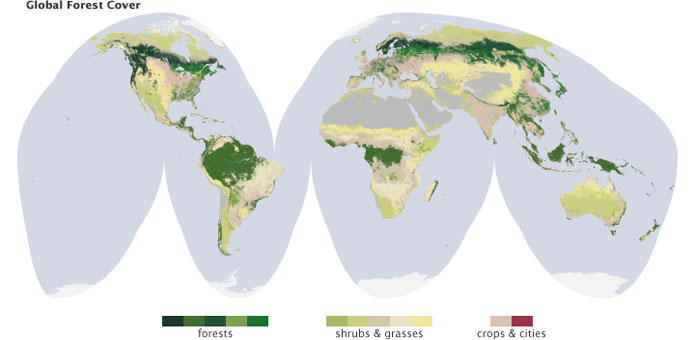
Think Progress’ headline lays it out starkly: Climate Change May Flip 40% of Earth’s Major Ecosystems This Century.The article questions whether or not species will be able to adapt to such quick change and an important point to remember is that we are one of those species.  …  A species projected to add two more billion to its ranks by 2050.

You don’t have to rush to the Sahara, but if you ever wanted to see tundra, don’t take your time about it.

[Map from Climatic Change journal via Think Progress via /r/collapse]
[Related: Get To Know Your Biomes]

Jan 022012
 

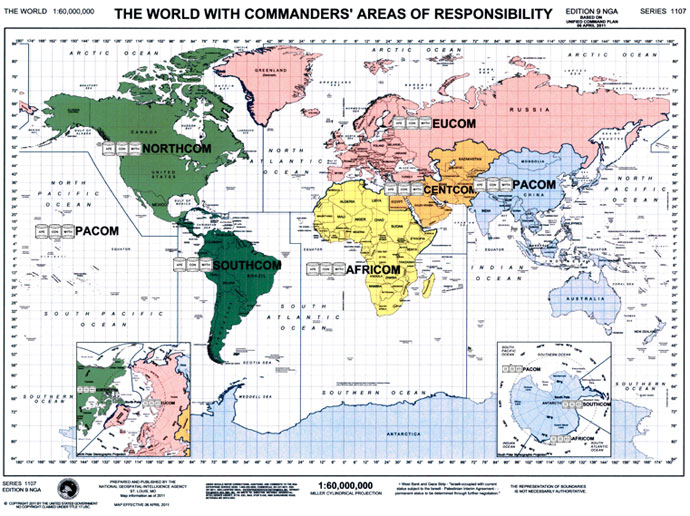
What better way to start the new year than to consider for a moment all the things that could go terribly wrong this year, at least from the U.S. foreign policy perspective.  That’s what the Council on Foreign Relation’s Preventive Priorities Survey: 2012 intends to offer.  Culled from a “targeted group of government officials, academics and experts”, three tiers of possibility are mapped out:

Tier 1 – Contingencies that directly threaten the U.S. homeland, are likely to trigger U.S. military involvement because of treaty commitments, or threaten the supplies of critical U.S. strategic resources.
Tier 2 – Contingencies that affect countries of strategic importance to the United States but that do not involve a mutual-defense treaty commitment.
Tier 3 – Contingencies that could have severe/widespread humanitarian consequences but in countries of limited strategic importance to the United States.

If you’d like to see the specifics of the threats for each tier, check out the press release on the CFR’s site or, if you’d like to dig further, download the whole report (pdf).

Bonus Question:  If you were a country in the leftovers of Tier 4, would you be relieved or nervous not to have made the list?

[Map by Council on Foreign Relations via Zero Hedge]

A Vote to Remember

 Posted by on December 12, 2011
Dec 122011
 

Paying attention to politics is not a rewarding effort.  It’s one thing to hear about everything Congress passes into law and another to keep up with the all the things they are considering.  With the media and activists from both sides joining in, citizens are quickly turned into EMTs, called from one emergency to the next with constant email blasts.

Even if you hold out for the big issues, there’s plenty to keep you busy.  Last month it was the multiple copyright bills bouncing around the House and Senate that would basically give corporations the ability to censor the internet and enable a flood of lawsuits aimed at consumers.  The effort to stop SOPA and PROTECT-IP seems to be paying off, but the threat remains and action is still required.

This month, however, the stakes are even higher.  What is it this time?  Oh, just the prospect of indefinite detention of U.S. citizens on U.S. soil.  No lawyer.  No trial.  Taxpayers could go straight to military prison, no longer having “due process” in their democracy bundle package.

The bill, S. 1867: National Defense Authorization Act for Fiscal Year 2012, is part of a yearly ritual where the military is sure to eventually get their money, which is starkly evident in the different votes for the bill and for the amendment to the bill, S.Admt.1107, proposed by Sen. Udall [D-CO], which would have scrapped the whole “indefinite detention” issue.

What’s worse: Senators specifically voting to allow indefinite imprisonment of their constituents or senators who voted to remove those provisions and, upon failing, voted for the bill containing said provisions?  Does something this big really have to come down to a veto?

It’s no wonder Congress’ disapproval rating is stuck in the 80% range.  We’ve got a little under a year before we get a chance to restock the ranks of Congress and this is a vote to remember then.

For more color on the situation, take your pick: Gawker breaks it down piece-by-piece, The Daily Show makes it sad but funny, plus articles from Forbes, Christian Science Monitor, Rolling Stone and the ACLU.

[Maps from GovTrack]

Where is Everyone Going?

 Posted by on November 29, 2011
Nov 292011
 

37.5 million Americans moved during 2010.  4.3 million changed states.

Find out where your neighbors went and who took their place…

(click for interactive map)

For contrast to Brooklyn’s traffic, check out some rural counties.

[Migration Map from Forbes]
[Related: To and Fro, Internationally]

A Map of Where to Give Thanks

 Posted by on November 23, 2011
Nov 232011
 

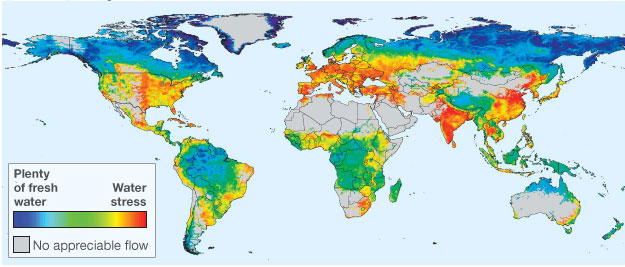
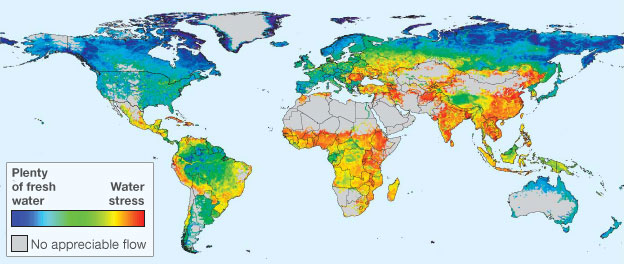
During hard times, being thankful for what we have comes a little easier.  Here’s a map to help guide your thoughts of thanks in regards to food.

But before you breath a sign of relief over there being so much room to grow more, remember that only 29% of the Earth’s surface is land and only 9% of it is arable.  And guess what, we’re not taking good care of it.

We have much to be thankful for, but it’s not a guaranteed condition.  They’ll still call it Thanksgiving, even if there’s hardly anything on your plate.  Just ask anyone with hardly anything on their plate.

[Map 1 from Radical Cartography, Map 2 from The Global Education Project]

Say Hello to Your PostNatural World

 Posted by on October 17, 2011
Oct 172011
 

Don’t let the continued debate over genetically modified foods fool you.  Field tests of GMO’s have been going full steam ahead.  Below you can see what was tried out in April 2007 alone.

If you missed yesterday’s Millions Against Monsanto in honor of World Food Day, there’s still two weeks left in October, which just happens to be Non-GMO Month.  Remember, knowing is half the battle, even with genetically modified foods, and that’s the half we’re still working on.  Tell the FDA that the least they can do is label it.

[Map from Center for PostNatural History (Thanks, Mason!)]

To and Fro, Internationally

 Posted by on September 23, 2011
Sep 232011
 

Ever thought about getting out of Dodge in a big way?  Looking for ideas?  At MigrationsMap.net, you’ll find a handy world map of information on where your fellow citizens have gone to and the origins of those who took their place…

The data comes from the Global Migrant Origin Database and gives a rough estimate of migrant populations circa 2000.  There were an estimated 175M migrants worldwide as of 2000, up from 75M in 1960.  But that’s only an increase from 2.5% to 2.9% of the total world population, which went from 3 billion-ish to 6 billion-ish in those same 40 years.

Anyway, here’s the list of lines that more than a million people have crossed, with the U.S. starting and finishing it off.

Pulling the full data set and counting up the complete totals for each country, the United States once again tops the list in positive net migration at 32.4M, with Mexico on the negative end of the spectrum at -9.7M.

But the impact of these numbers depend on the total population of each country.  Considering only countries with populations over one million, the United States comes in 15th in terms of migrant population as a percent of total 2000 population.  Meanwhile, Mexico falls just short of the list in regard to percent of population lost against the total population had no one left.

And finally, here’s the stats on all 24 countries with a population over 50M as of the 2000 censuses.

There’s a story behind every number on here.  Hopefully once we get all the numeric data visualized, the next wave of visual representations will work to connect the data to those stories.  We have so much data, but so little reference for it.

Jun 092011
 
CAmgmtLandscape_FRAP
CAdevelopmentmap_FRAP

[Click on the maps to get a little closer or check out the full PDFs and more at FRAP maps]


In response to continued economic hardship, Ape Con Myth recommends that the entire population of the United States take a vacation as soon as possible. Please refer to the map below to find your destination.  Each state has been assigned a foreign country with a comparable GDP.

USstatesCountryGDP

To complete the exercise, write a short essay on what your home state could learn from its economic counterpart, and vice versa.  Airlines are asked to provide pen and paper to all returning travelers for this purpose and to forward the collected works to Ape Con Myth for processing.  Wikipedia is an acceptable substitute for those who can’t afford the trip.  Your essays are welcome in the comments.

[Map via Big Think's Strange Maps; Thanks to scribblesabit]

Jun 022011
 

Tourists.  Don’t live with them, can’t live without them?  Whatever the case, Eric Fischer’s Locals and Tourists map collection uses Flickr picture locations to show where you should or shouldn’t go, depending on your disposition, in 50 cities around the world.  Blue is for the peaceful locals and red for the invading tourists hordes…

Find these maps and much more at here.

[via Dohop Travel Blog]

United States Ecoregions

 Posted by on May 24, 2011
May 242011
 

For states that are united, there sure are a lot of ways to break them down.  Most, however, are nothing much to look at compared with how nature’s divisions sketch out…

Click on the map to find out what all those numbers mean on Wikipedia, or if you want to go straight to the source, the EPA’s Western Ecology Division has some beautiful pdfs available for download, including state-level maps.

Honorable mention goes to the World Wildlife Fund’s list of U.S. ecoregions.  Always good to have a second source.

Ape Con Myth Devisions

© 2012 Ape Con Myth Suffusion theme by Sayontan Sinha