Month: May 2011

  • One of These Things is Not Like the Others

    Before we get to the chart, let’s refresh ourselves on the drill…

    [youtube http://www.youtube.com/watch?v=Ect-kgxBb4M]

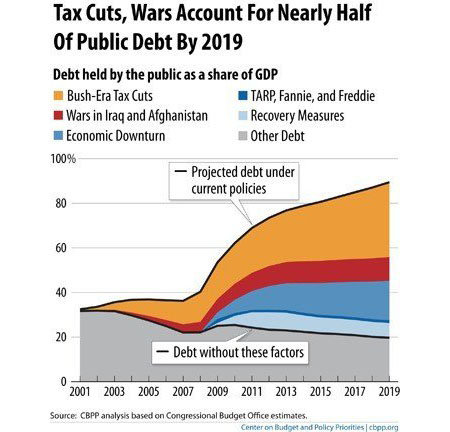
    Okay, now look at the chart and pick out what’s different…

    Did you pick the Bush-Era Tax Cuts?  Then you’re absolutely right!

    Unlike wars, downturns, bailouts and recoveries, we can project the direct financial effect of tax cuts before the fact.  Everything else on the subject is speculation.  At this point, that there is still a debate about it at all points to much deeper problems.

    [Chart via GOOD]

  • THINK

    “All of the problems of the world could be settled easily if men were only willing to think.” – Thomas J. Watson

    [youtube http://www.youtube.com/watch?v=39jtNUGgmd4]

  • @Peanutweeter

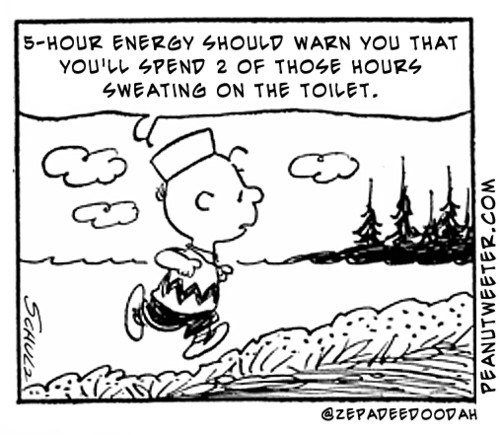
    Random Twitter posts + Peanuts comic strips = Wonderful

    [@Peanutweeter – Thanks, Pete!]

    Update: Peanuts comic strips + Brand management company = No sense of humor

  • Historical U.S. Metro Area Population Ranking

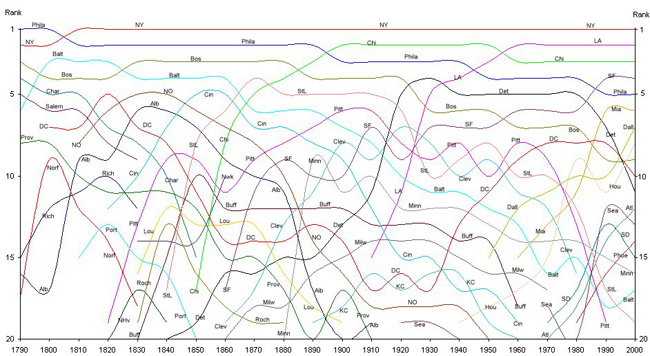
    The history of American cities, based on metropolitan population, is about to be all over your face.  There’s so much here you just have to see it for yourself.  Click the image and enjoy a simple, yet powerful, American history lesson…

    HistMetPop[Peakbagger chart via Kelso’s Corner]

  • SLC Punk

    [youtube https://www.youtube.com/watch?v=DI0jixcWYzM]

  • Amazon’s Risk Factors make for Bad Corporate Poetry

    We face intense competition.

    Our expansion places
    a significant strain
    on our management, operational, financial and other resources.

    Our expansion into
    new products, services,
    technologies and geographic regions
    subjects us to
    additional business, legal,
    financial and competitive risks.

    We may experience significant fluctuations
    in our operating results
    and growth rate.
    We may not be successful in our efforts
    to expand
    into international market segments.

    If we do not successfully optimize
    and operate
    our fulfillment centers,
    our business could be harmed.
    The seasonality of our business
    places increased strain
    on our operations.

    Our business could suffer
    if we are unsuccessful
    in making, integrating, and maintaining
    commercial agreements, strategic alliances, and other business relationships.
    Our business could suffer
    if we are unsuccessful
    in making, integrating, and maintaining
    acquisitions and investments.

    We have foreign exchange risk.

    The loss of key senior management personnel could
    negatively affect our business.
    We face risks
    related to system interruption
    and lack of redundancy.
    We face significant inventory risk.
    We may not be able to adequately protect our intellectual property rights
    or may be accused of infringing intellectual property rights of third parties.

    We have a rapidly evolving business model
    and
    our stock price is highly volatile.

    Government regulation is evolving and
    unfavorable changes could harm our business.
    Taxation risks could subject us to liability
    for past sales
    and
    cause our future sales to decrease.
    We could be subject to additional income tax liabilities.

    Our supplier relationships subject us to
    a number of risks.

    We may be subject to
    risks related to government contracts
    and related procurement regulations.
    We may be subject to
    product liability claims
    if people or property are harmed
    by the products
    we sell.
    We are subject to payments-related risks.

    We could be liable
    for breaches
    of security.
    We could be liable
    for fraudulent or unlawful activities
    of sellers.

    [from Amazon.com’s 2010 Annual Report (PDF)]
  • United States Ecoregions

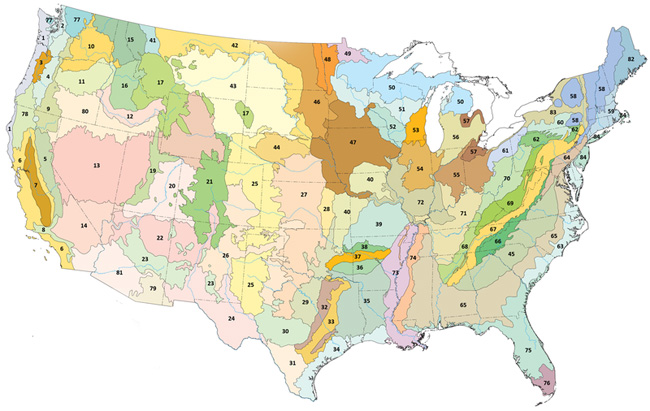
    For states that are united, there sure are a lot of ways to break them down.  Most, however, are nothing much to look at compared with how nature’s divisions sketch out…

    Click on the map to find out what all those numbers mean on Wikipedia, or if you want to go straight to the source, the EPA’s Western Ecology Division has some beautiful pdfs available for download, including state-level maps.

    Honorable mention goes to the World Wildlife Fund’s list of U.S. ecoregions.  Always good to have a second source.

  • Wasted URLs: Ape.com and Apes.com

    Ape Con Myth is all for acronyms, but online it is easy to take them too far.

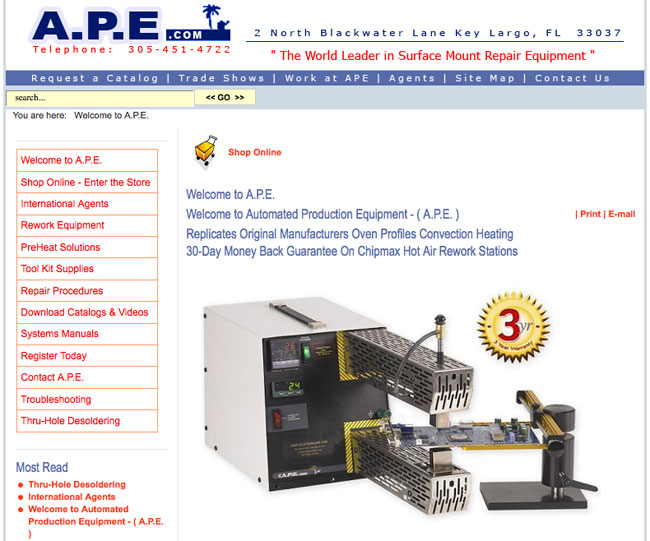
    Yes, Automated Production Equipment does equal A.P.E., but even as “The World Leader in Surface Mount Repair Equipment”,  this is not cutting it for Ape.com…

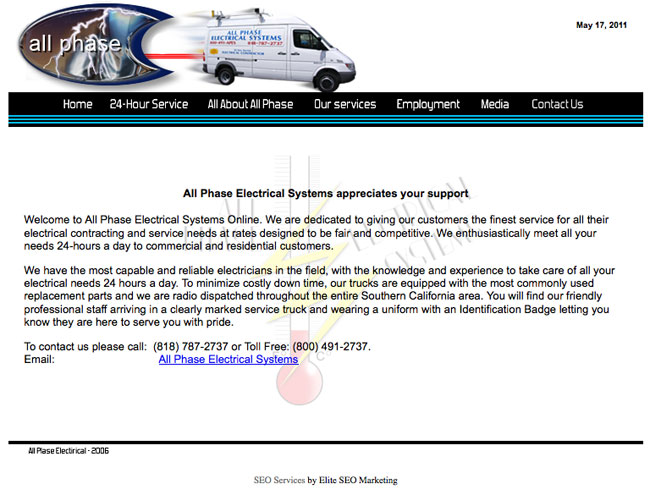
    But at least A.P.E. is supposedly international and put what looks like an ape under the palm tree in their logo.  All Phase Electrical Systems, on the other hand, is an electrical contracting outfit only serving southern California.  Unless the owner is big into evolution and thought he was covering a nod to apes by putting his picture on the site, there’s no justification for Apes.com looking like this:

  • Eisenhower’s Farewell

    Though his warning about the military-industrial complex gets the most play, Eisenhower also expressed concern over public policy becoming a “captive of a scientific, technological elite” and of our democracy turning into an “insolvent phantom”.  Fifty years doesn’t seem like such a long time ago, but it sure looks and sounds different…

    [youtube http://www.youtube.com/watch?v=CWiIYW_fBfY]

    For comparison, here’s the last speech of everyone to follow: Kennedy, Johnson, Nixon, Ford, Carter, Reagan, H.W. Bush, Clinton, W. Bush.

  • Global Water Summary Info

    It’s too bad UN-Water didn’t make it in our initial Google results for “water” (it’s the 64th result) because if you have a few minutes and a desire to understand the global water situation, the links to all the information you need are on one page.

    In addition to their statistics page, UN-Water has three flagship publications:

    What’s the story?  From skimming 500 pages of pdfs, it was largely what you’d expect.  Developing countries are making progress, but have a long way to go.  Increasing populations, advancing economies, climate change and lack of information, communication and funding are just a few of the factors involved.  Billions of people are still without the basics and while Africa and Asia house the areas furthest behind, there’s plenty of trouble spots in the most developed of countries and economies.

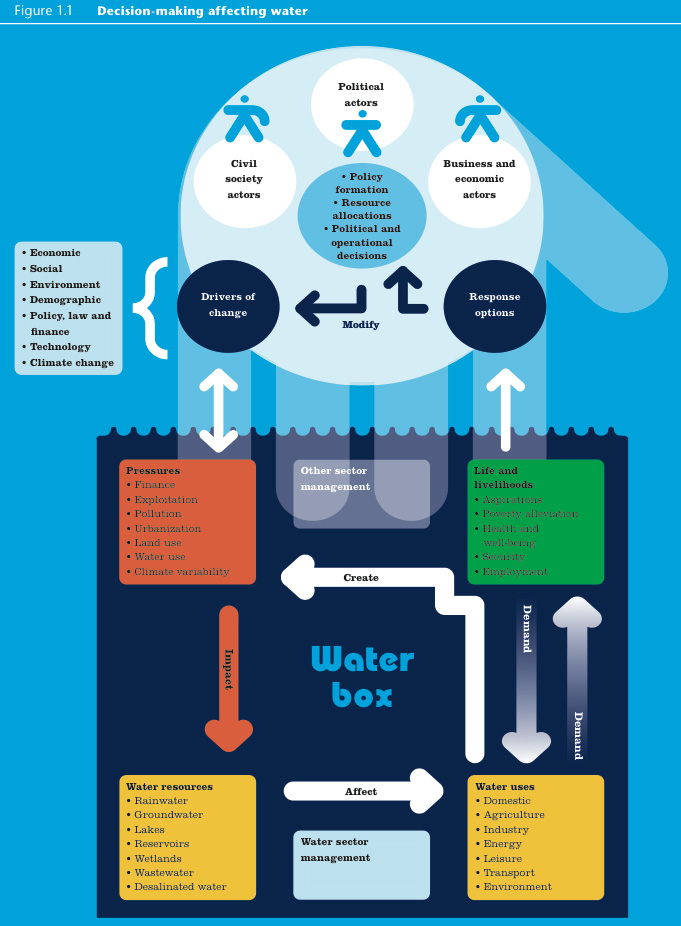
    Although the challenges are great, it is important to remember that this is not a problem in search of a solution.  For the most part, it is a lame-duck problem waiting for the implementation of solutions already in hand.  That’s why the World Water Development Report focuses our attention on decision-making:

    That’s the finish line for this week’s water sprint.  Next steps include digging into some country-level data, where we’ll really start to see what the hold-up is, and updating/expanding on our first water map.